The Challenge
The Challenge
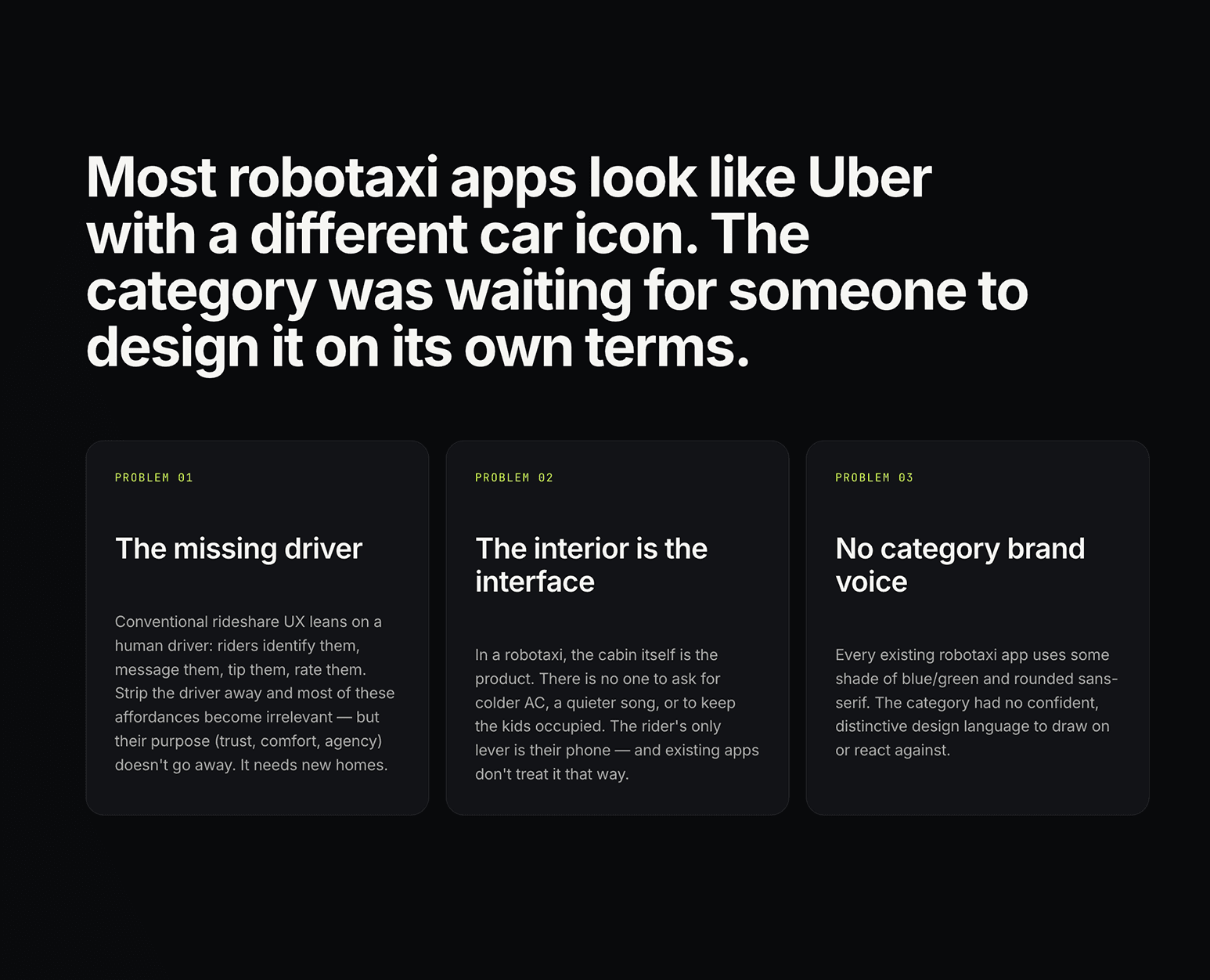
The brief was simple to state but difficult to answer: design a mobile app that converts first-time users who may be hesitant to get into a self-driving car into advocates for the service.
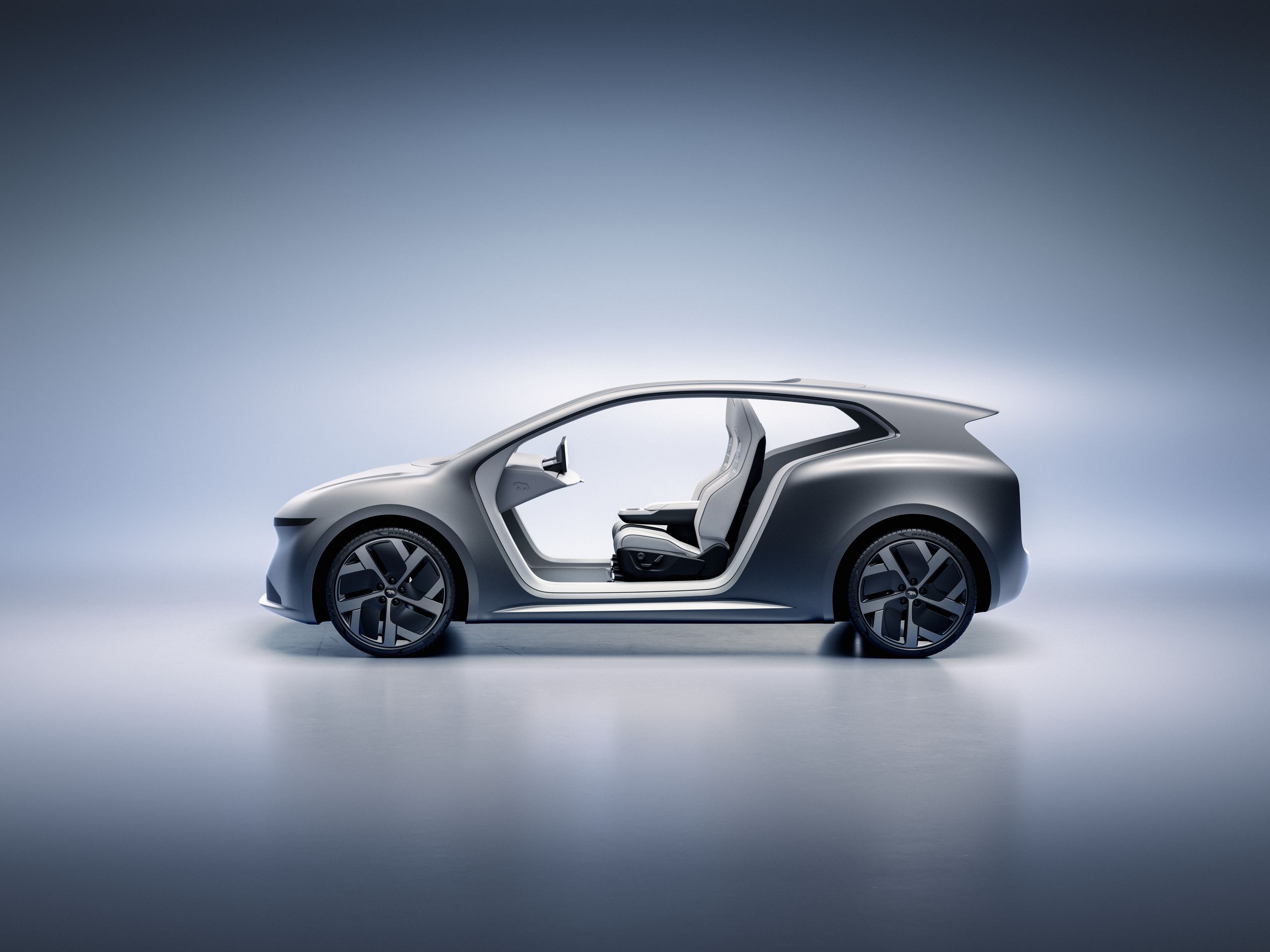
The challenge wasn't replicating Uber-shaped patterns. It was asking what a ride should feel like when the car is the entire interface, the rider has no one to talk to, and trust has to be earned by software alone.
Approach & Strategy
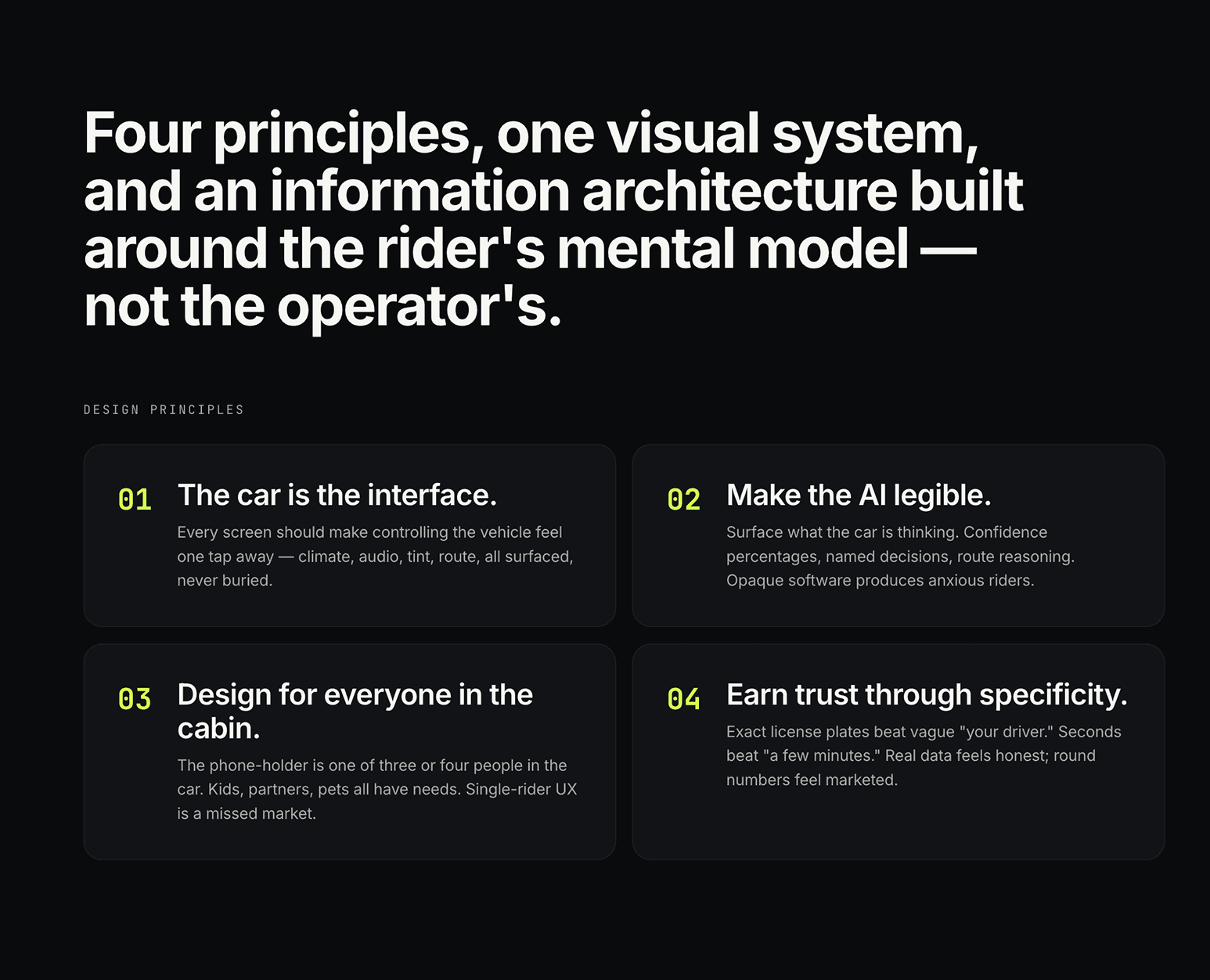
Design Principles
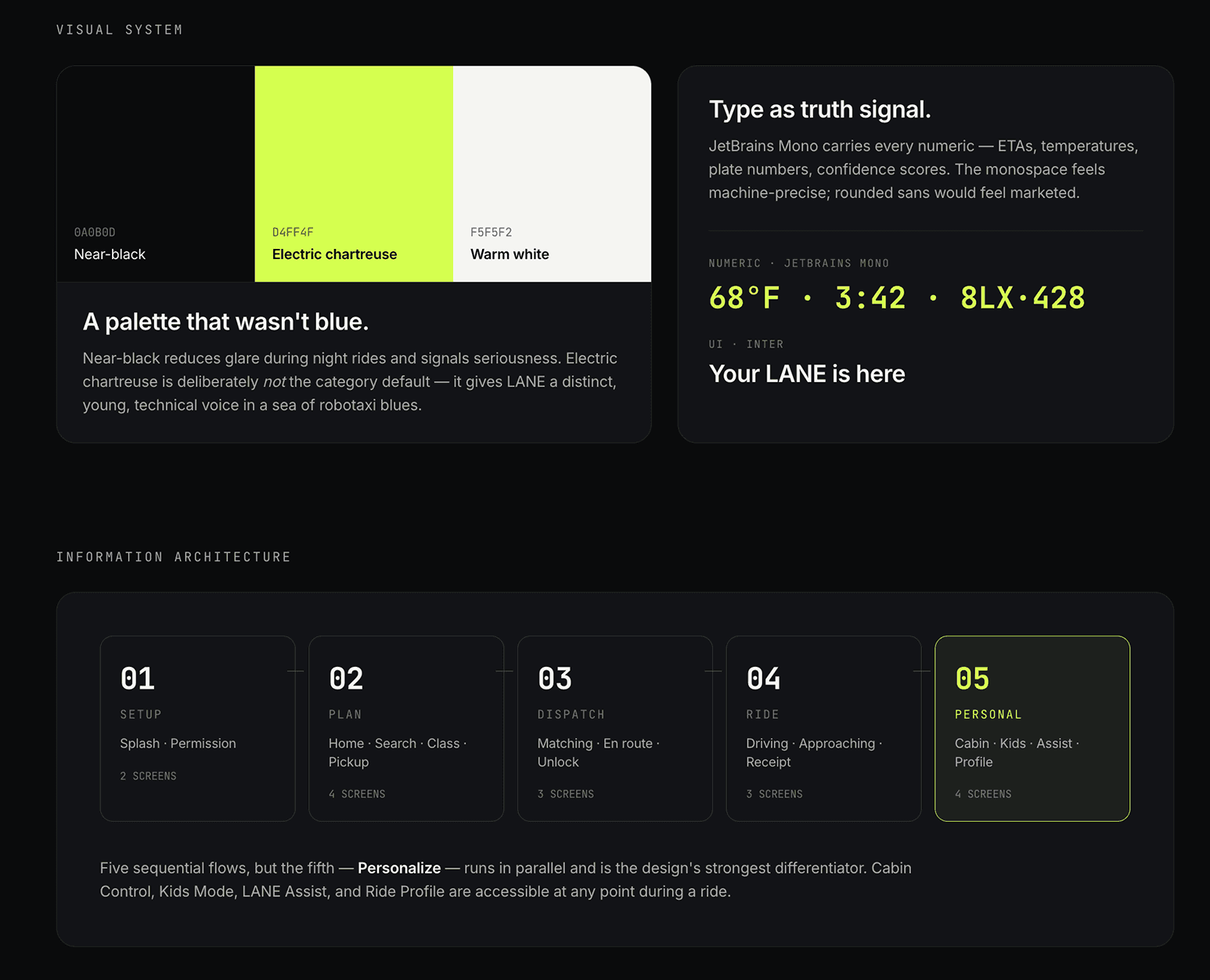
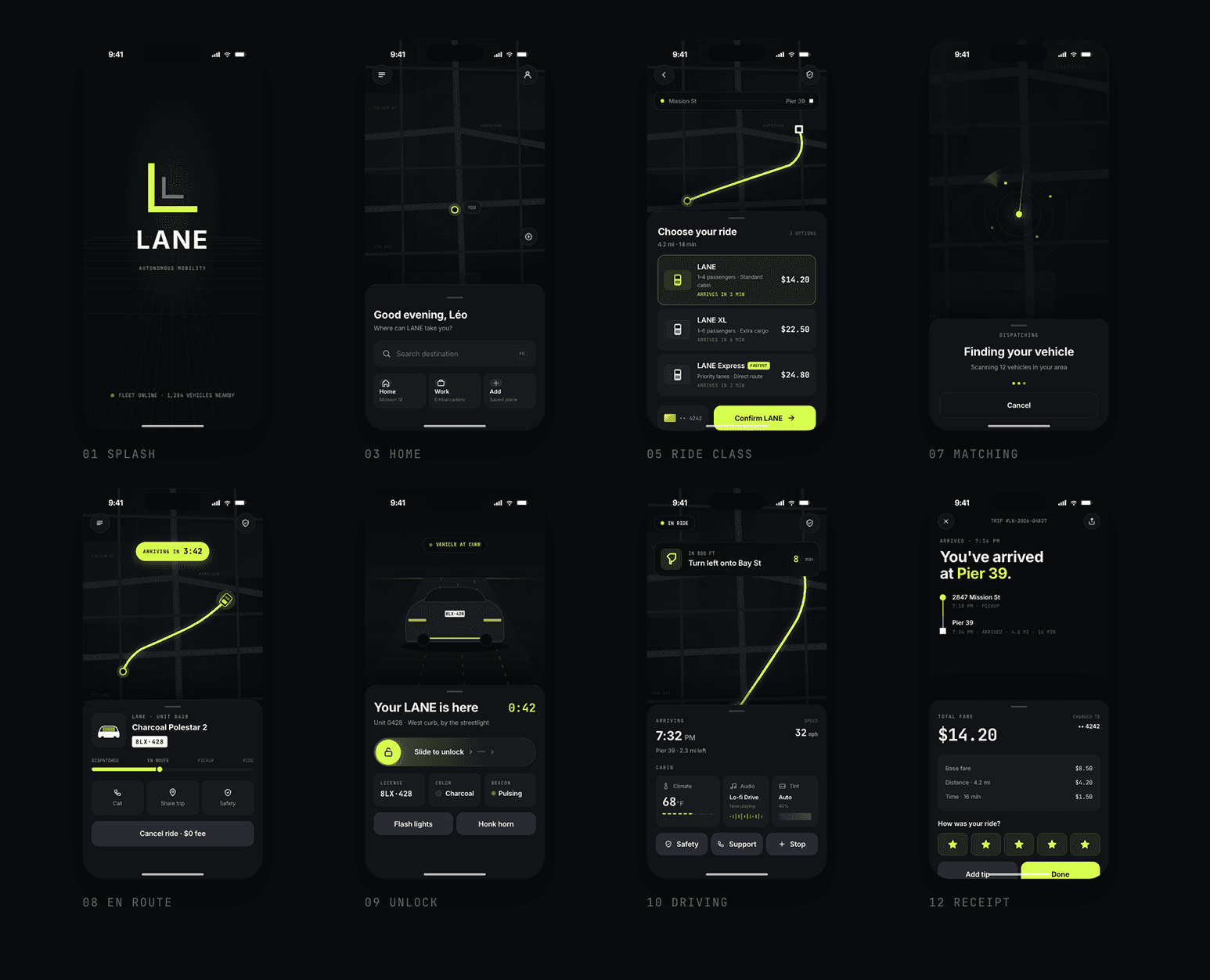
When designing LANE’s system, my goal was to create a visual language that feels precise, dependable, and quietly intelligent — less like a consumer rideshare app and more like a trusted transportation interface.
Robotaxi experiences operate in moments where users need immediate confidence:
confirming pickup details, understanding vehicle status, tracking ETAs, and interpreting system feedback in real time.
The design system was built around three principles:
1. Signal over decoration
Because users interact with LANE in high-attention, time-sensitive contexts, the interface needed to prioritize instant comprehension.
This led to:
High contrast layouts
Clear visual hierarchy
Reduced ornamental UI
Information surfaced as structured “signals”
Every screen element was evaluated based on one question:
Does this help the rider make a decision faster?
2. Differentiate from “robotaxi blue”
Most mobility and autonomous vehicle brands rely heavily on cool blues to communicate technology and trust.
I intentionally moved away from that category convention.
The electric chartreuse accent creates:
Immediate brand distinction
High visibility in low-light conditions
A technical, data-forward feel
Strong contrast against near-black surfaces
Paired with warm white, the palette balances machine precision with human accessibility.
The result feels advanced without becoming sterile.
3. Typography as interface infrastructure
For a robotaxi product, numbers are constantly doing critical work:
ETAs
Plate verification
Confidence indicators
Dispatch status
Route timing
That’s why I introduced JetBrains Mono as the numeric system layer.
The monospaced rhythm reinforces:
Machine reliability
Data precision
Scanability under motion
It creates a subtle but important distinction between informational system output and human-facing UI copy.
The rounded sans layer softens that precision and keeps the product approachable.
Process
Key Moments & Insights
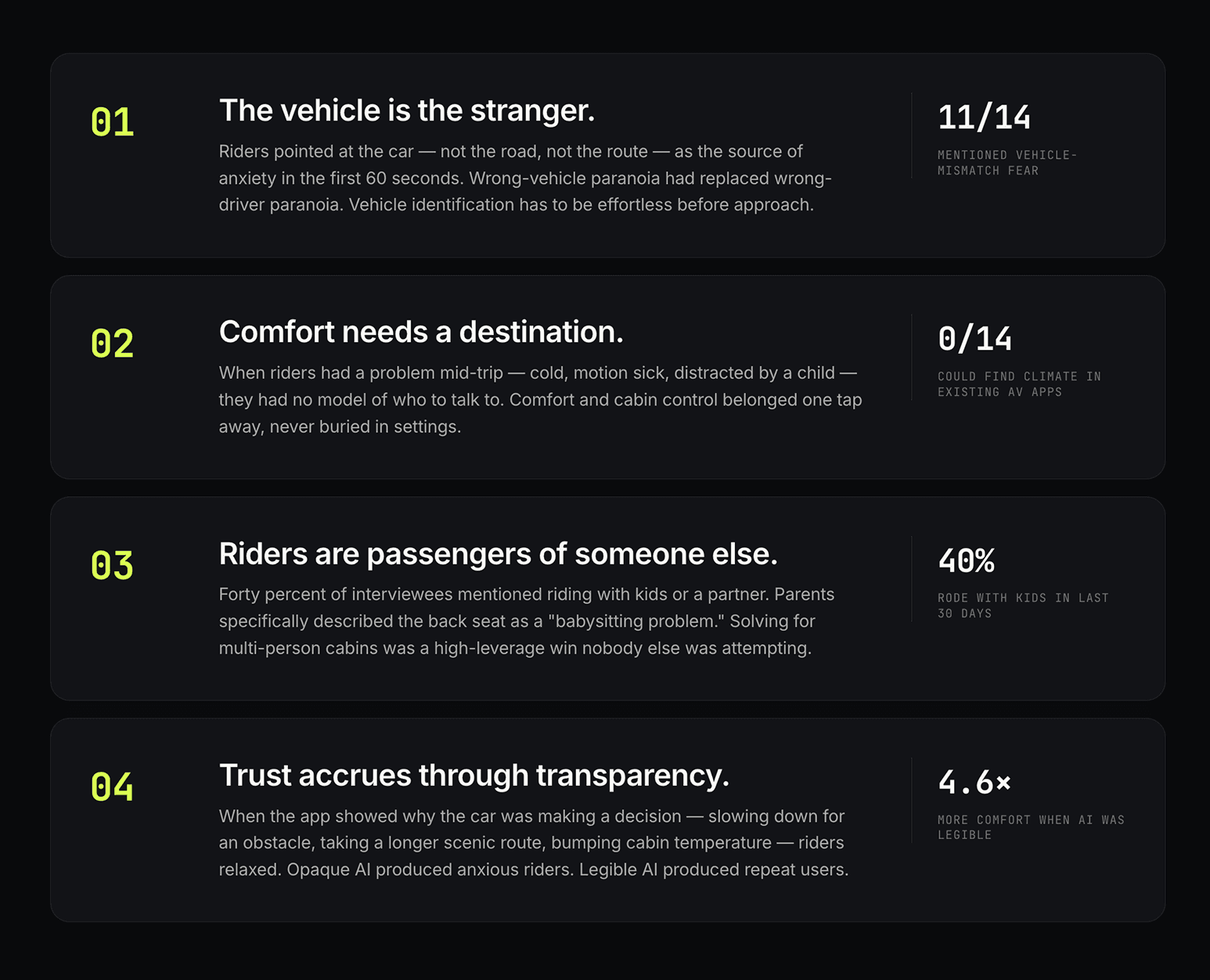
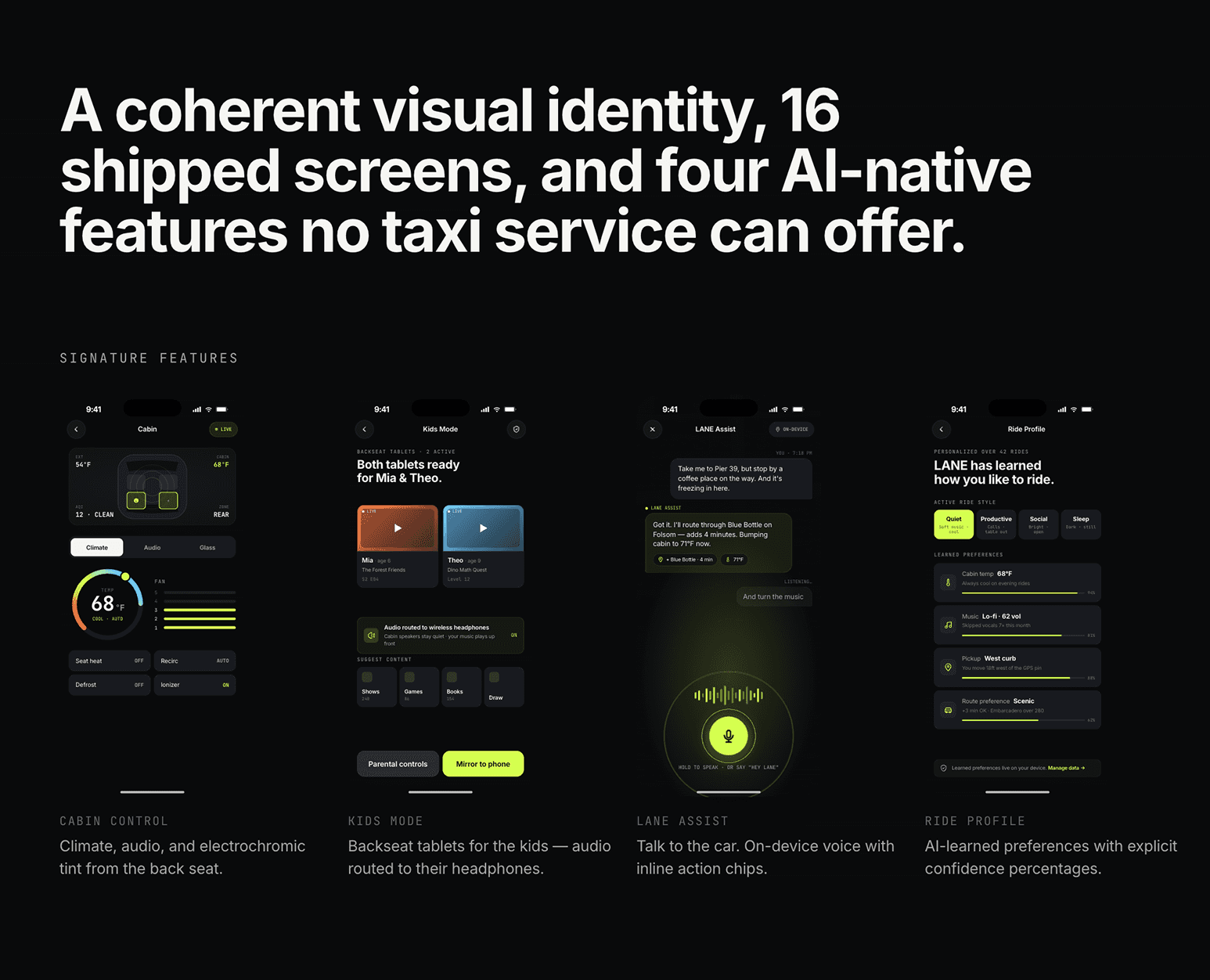
I wanted to home in on 4 distinct features that would most effectively convince a user to keep returning to the service, as it would eventually become, in their mind, superior to using a conventional human-operated taxicab.
Full Control
The user can use the LANE app to control the car's music, temperature, and even the amount of light entering through the windows. If they want to put on their favorite album, turn the AC to maximum, and even take a nap more easily by darkening the windows, they can.
Built-in Backseat Tablets
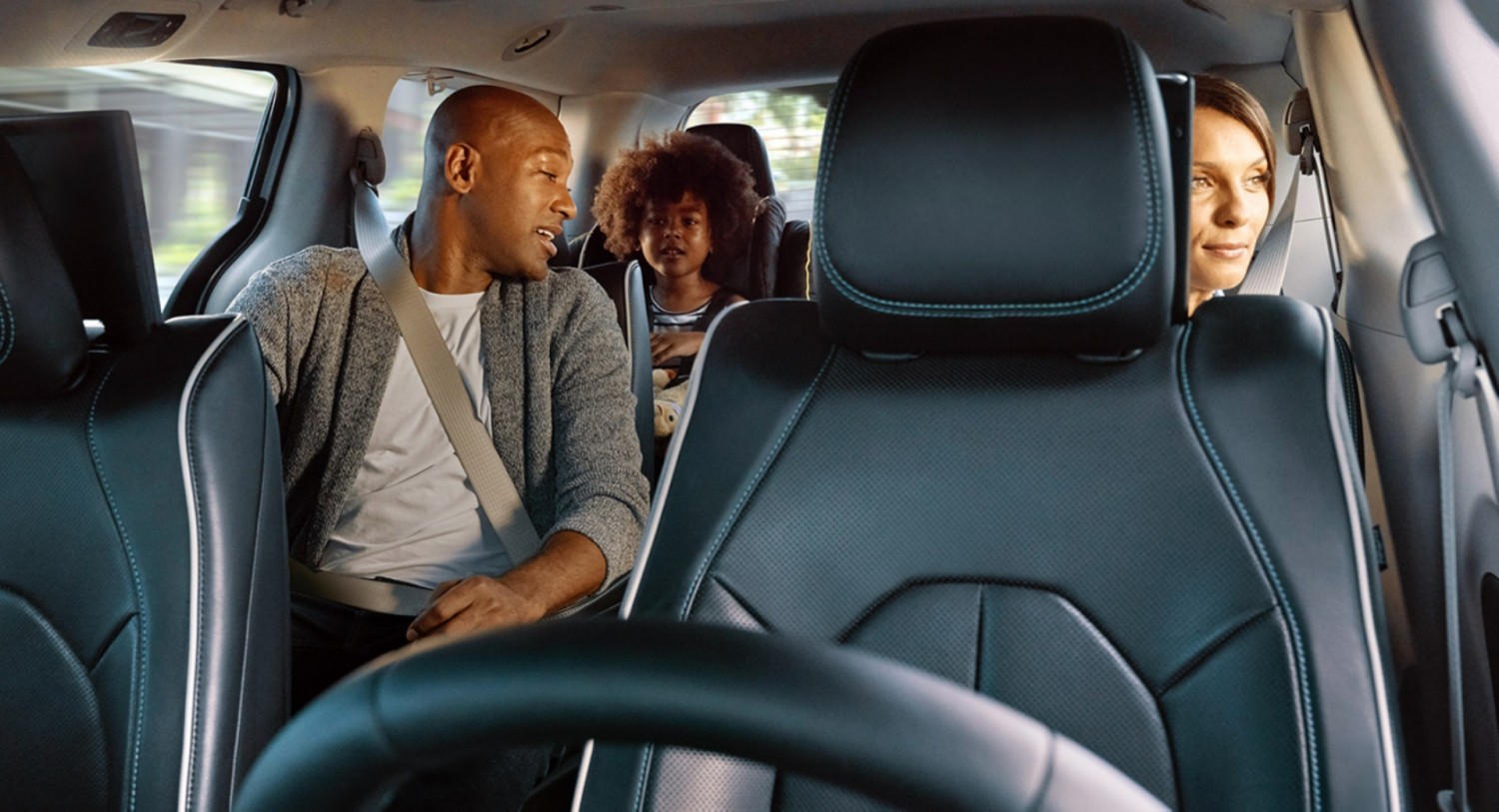
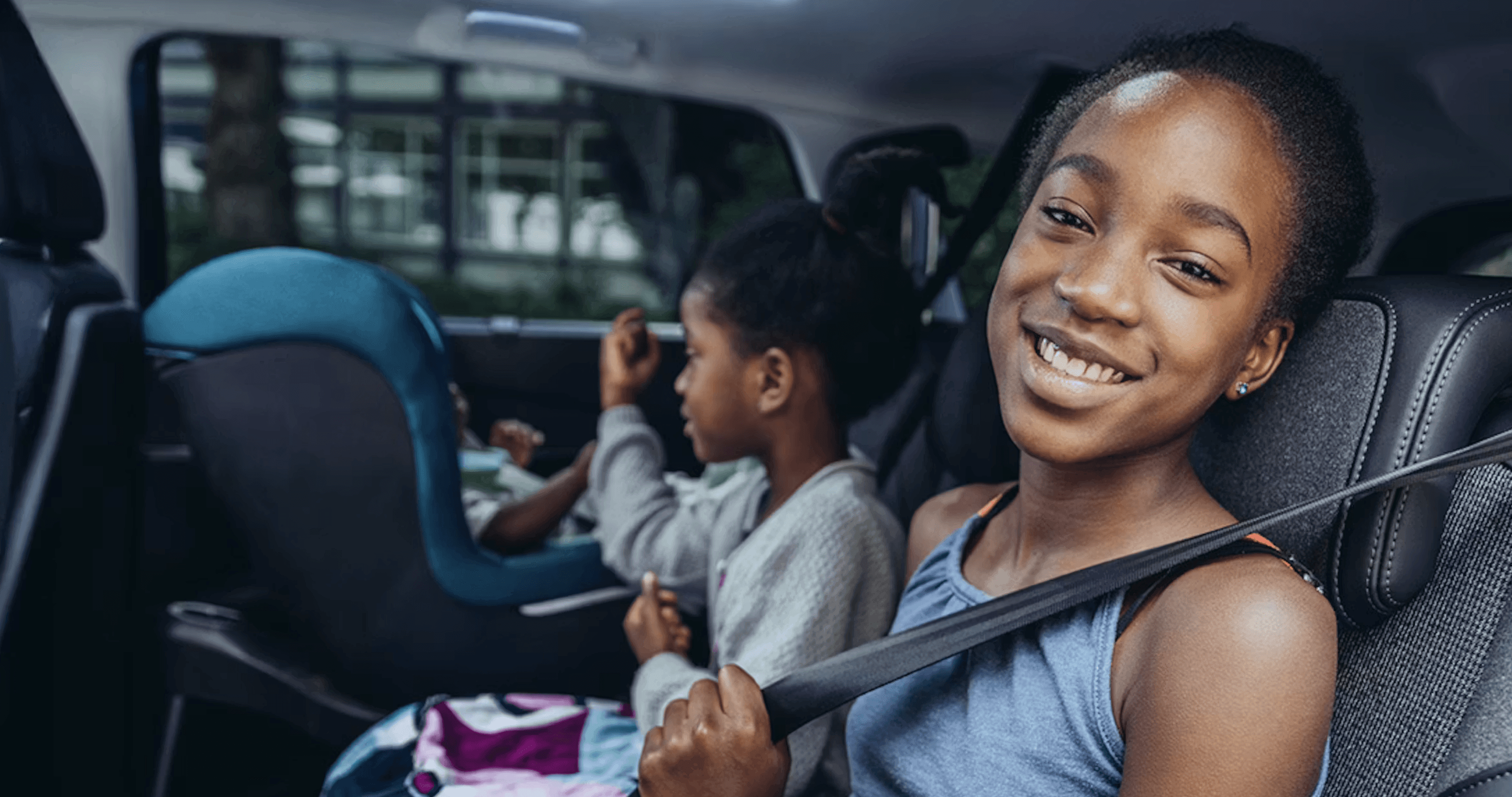
I tried to think of what kind of users would be most likely to utilize a robotaxi multiple times a day, and it hit me- parents. Parents of children and newborns are always bouncing between multiple locations throughout the day: home, school, the supermarket, after-school activities, etc. To provide mom or dad with some much-needed rest during their trip with LANE, we decided to include tablets in the backseat, loaded with age-appropriate games and shows to help the child calm down.
Audio Controlled Directions
In the same way that iPhone users speak directly to Siri to execute certain requests and actions, we wanted users to be able to do the same audibly. So, if a user wants to make any changes to the AC or other features, they can just speak into the app, and the request will be enacted.
Retaining Customer Information
If a user utilizes these features many times, over many rides, the LANE app's built-in AI will record all that data and leverage it for the next ride. The AI will surmise, "This rider prefers the temperature at 75 degrees, loves jazz, and prefers darkened windows." Then the ride will adjust itself accordingly as soon as it picks up the passenger.
The Results
The Results
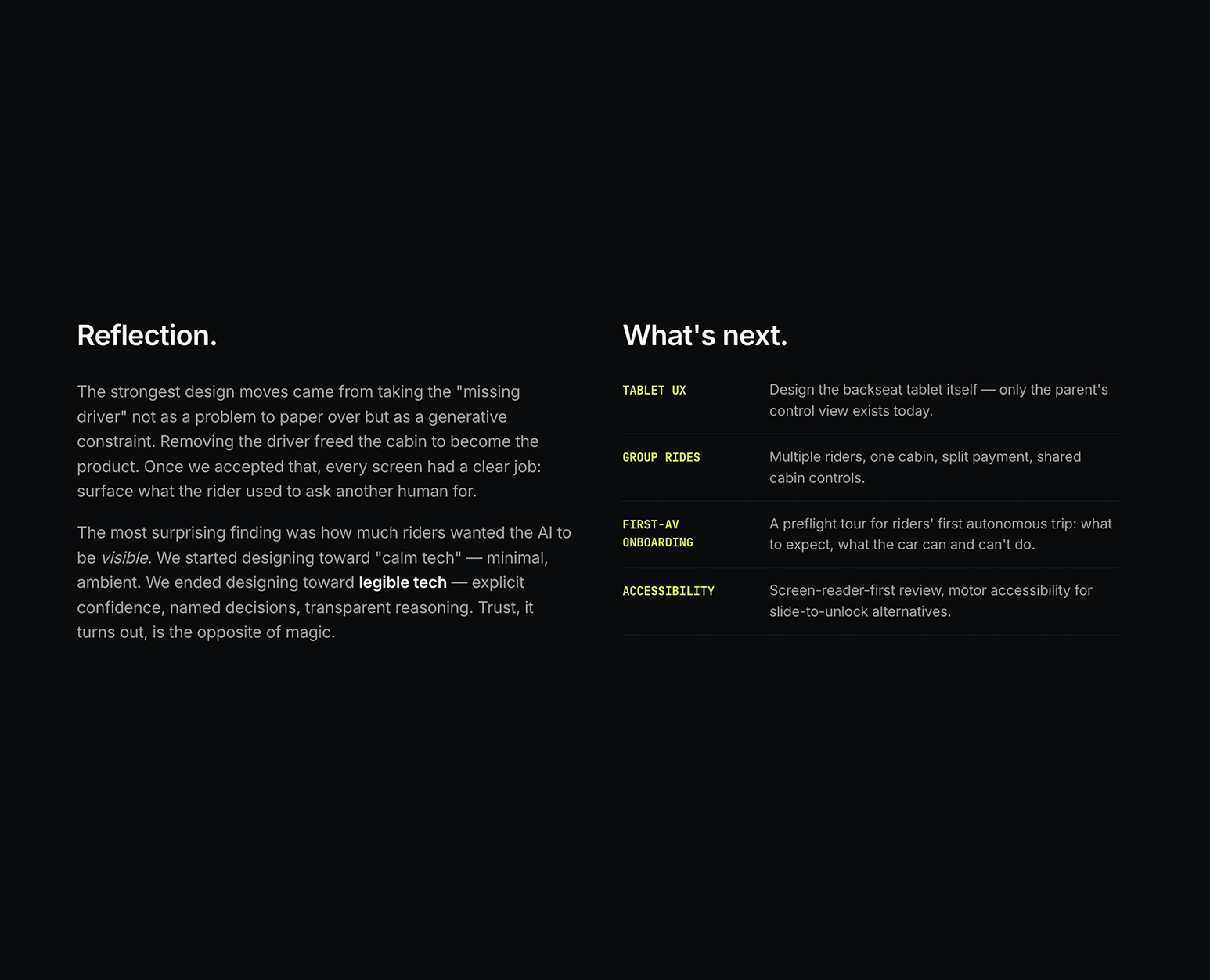
This project pushed me to look past surface-level design and focus on creating a system that makes advanced technology feel intuitive and human.
By prioritizing trust, clarity, and rider control in every decision, I felt that I was able to build an experience that feels calm, precise, and reliable. To me, the future of mobility shouldn’t be intimidating or strange, nor should we shy away from embracing new technology. Instead, we should allow ourselves to take the risk, and recognize the capability AI has to improve our lives in every way imaginable.
Next projects.
(2016-2025)