Challenges
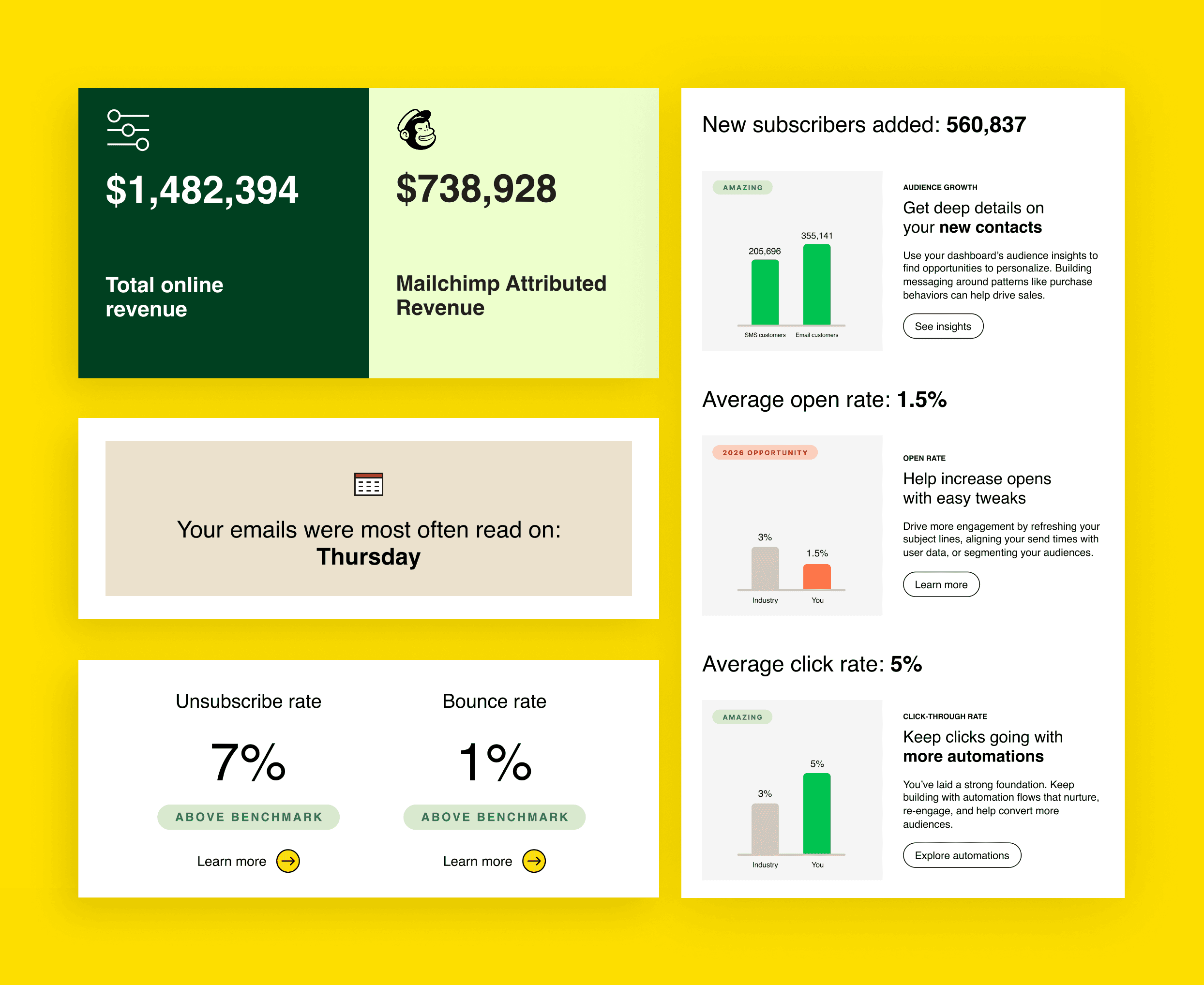
Mailchimp already provides excellent analytics through its quarterly “90 Days Insights” reports, but those insights are fragmented across multiple reporting periods and influenced by seasonal volatility.
Users often interact with dozens of campaigns over the course of a year, yet lack a cohesive way to understand performance at a macro level.
This creates a gap between information and insight: while users can access metrics like open rates, click-through rates, and audience growth, they struggle to synthesize them into a meaningful narrative about their business.
Approach and Strategy
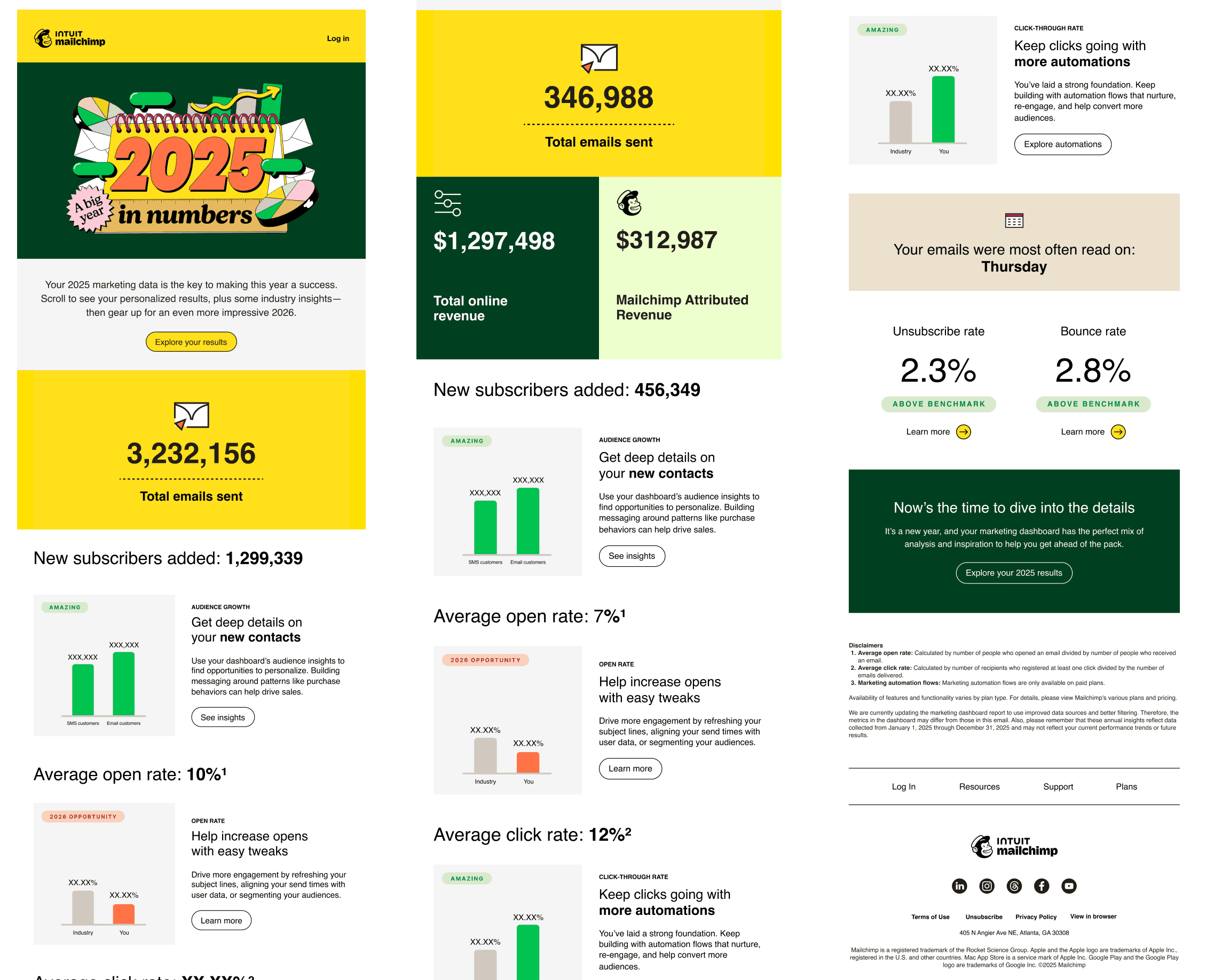
The core shift was moving from analytics as a dashboard to analytics as a narrative system.
Instead of presenting isolated metrics, the experience structured user data into a story with a clear beginning, middle, and end; Helping to guide interpretation rather than leaving it up to the user.
The strategy centered on three principles:
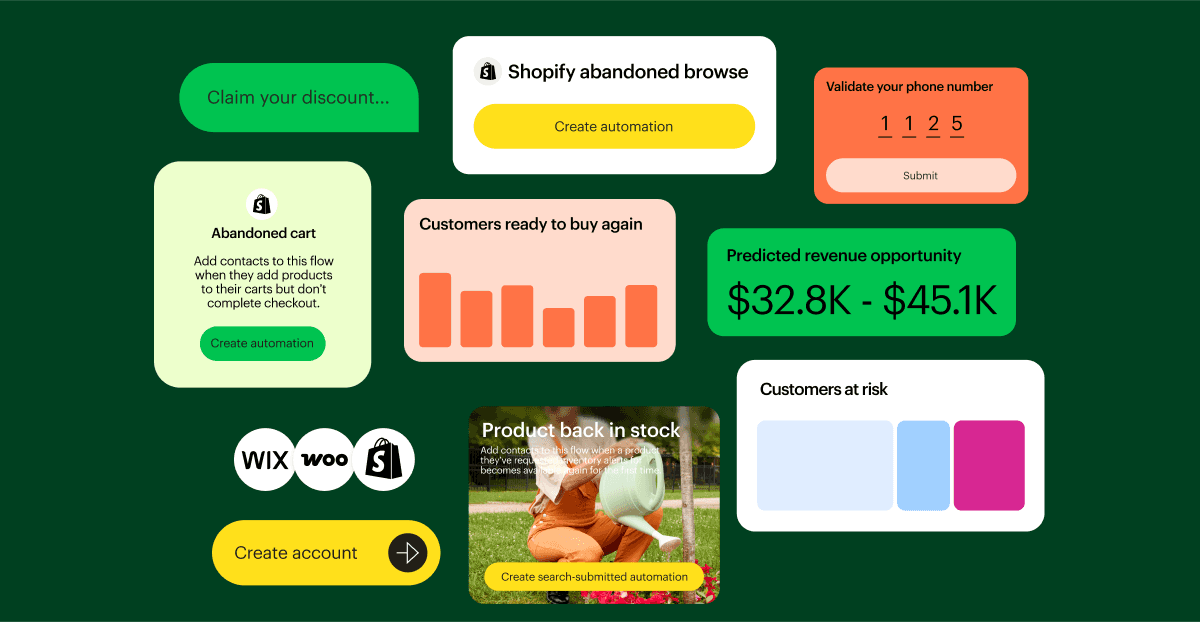
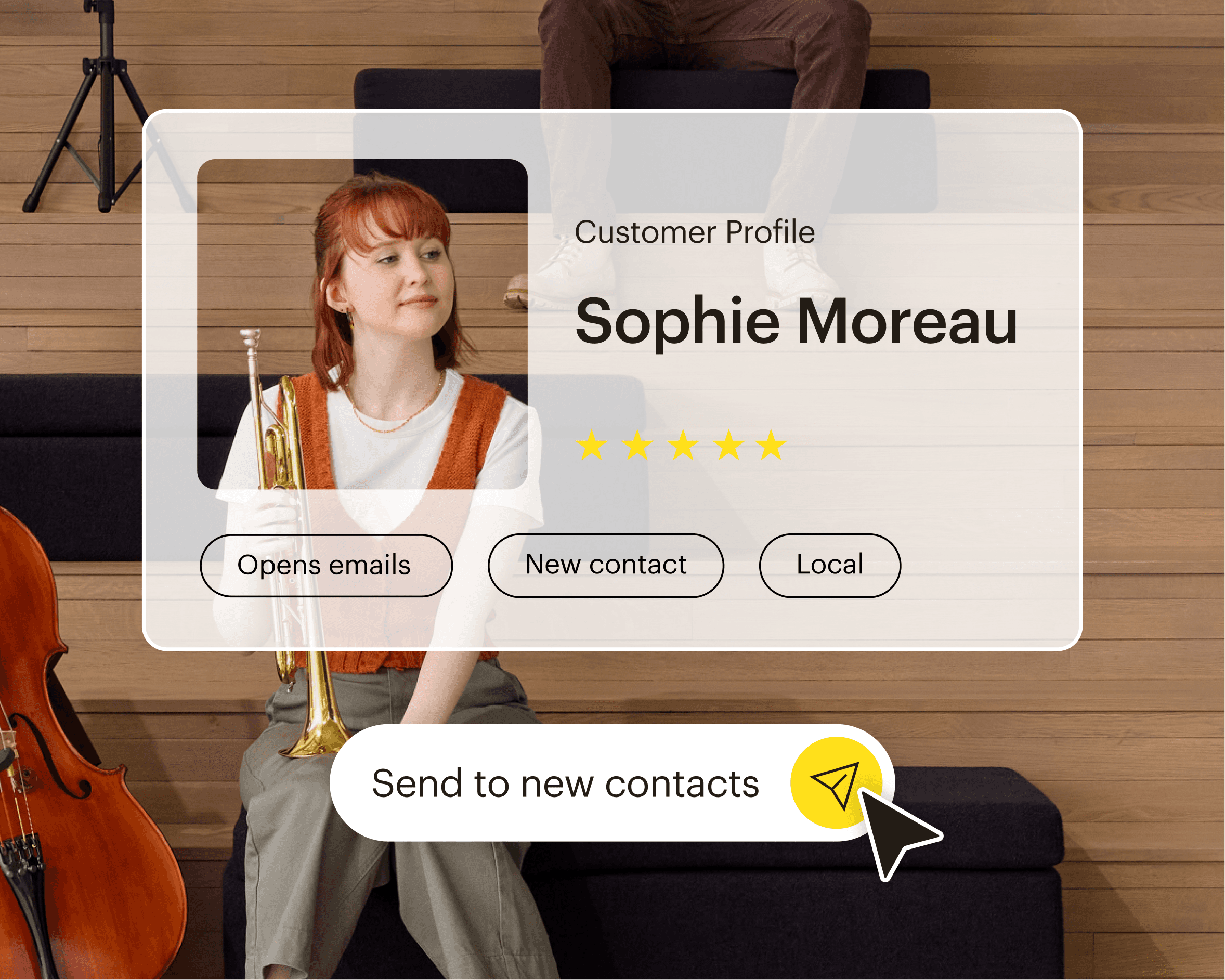
• Personalizing data at scale across millions of users
• Reducing cognitive load in interpreting multi-metric performance
• Introducing moments of delight to reinforce engagement and retention
A key constraint was scalability: the system needed to dynamically adapt to users with vastly different activity levels, from those sending fewer than 10 campaigns annually to those managing thousands.
Process and Solution
The process focused on identifying which data points delivered the highest value over a 12-month period.
While Mailchimp tracks dozens of performance metrics, analysis showed that users responded most strongly to:
• Comparative insights (year-over-year growth)
• Highlight moments (best-performing campaigns)
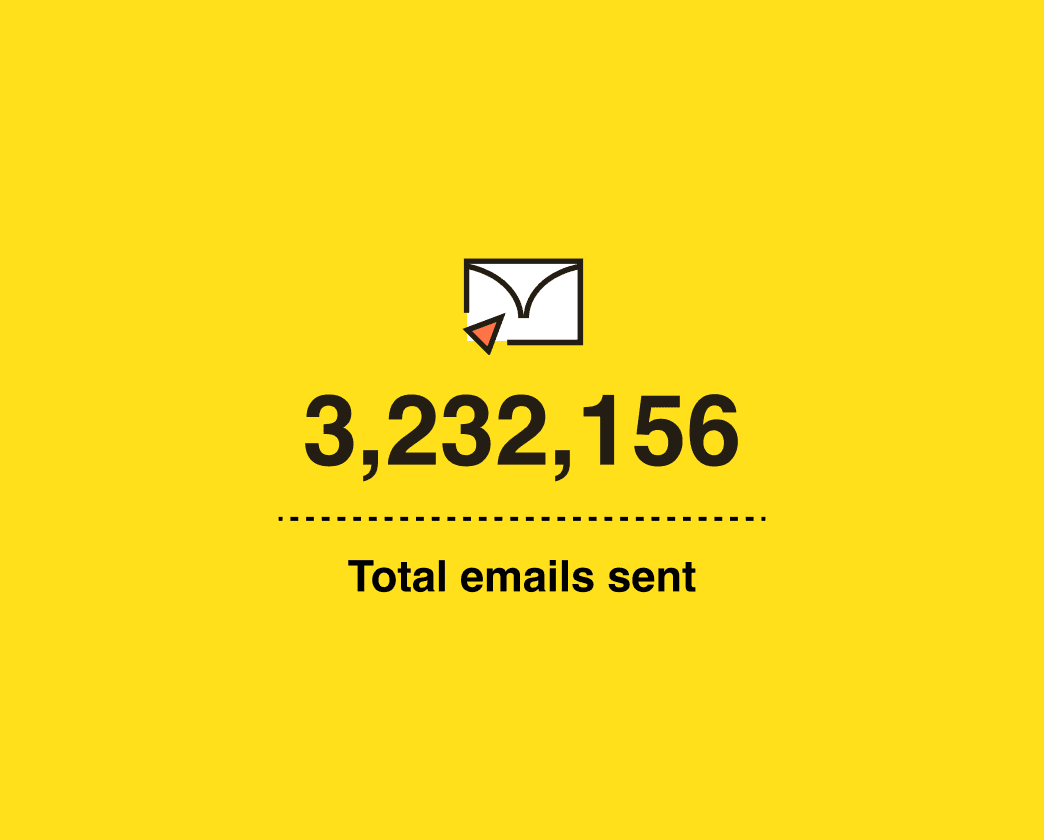
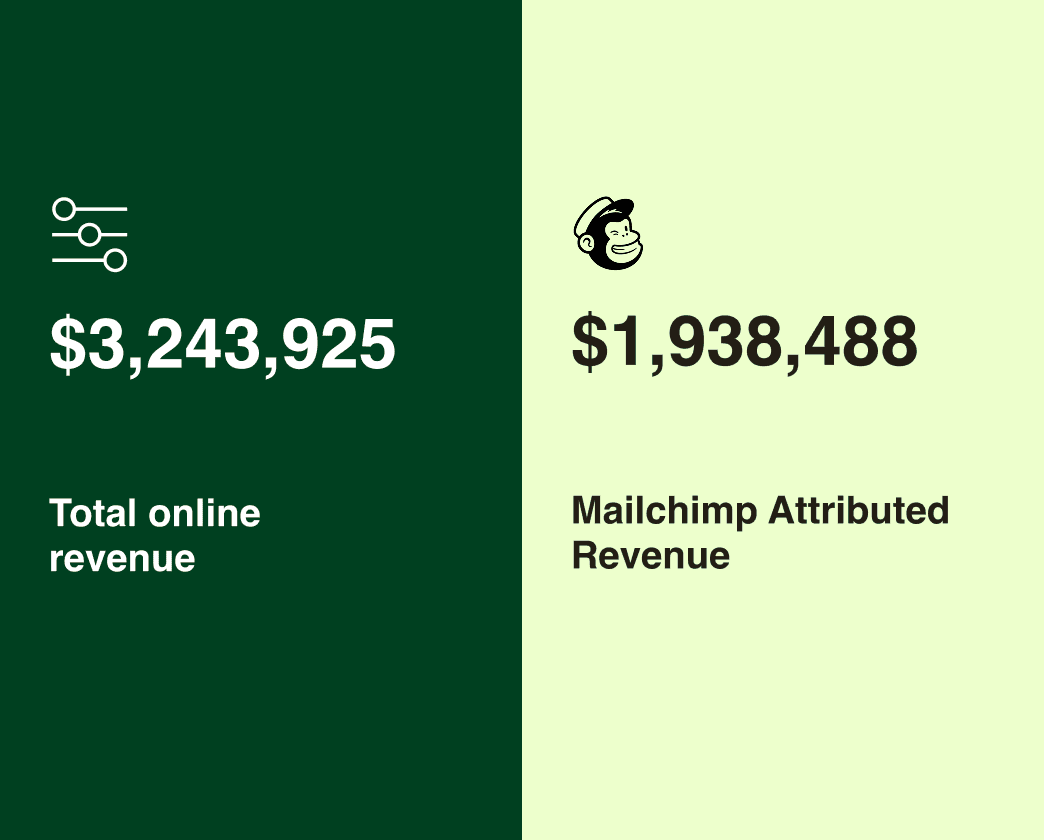
• Aggregate signals (total reach, engagement, revenue impact)
Rather than surfacing all available data, the experience prioritized a curated subset of metrics that balanced completeness with clarity.
The final solution was a modular, scroll-based narrative composed of dynamic content blocks. Each module represented a “moment” in the user’s year such as growth milestones, campaign highlights, or audience engagement trends, progressively revealing insights instead of overwhelming users upfront.
This modular system allowed the experience to scale across a wide spectrum of users, dynamically adapting content density and messaging based on individual activity levels.
The Results
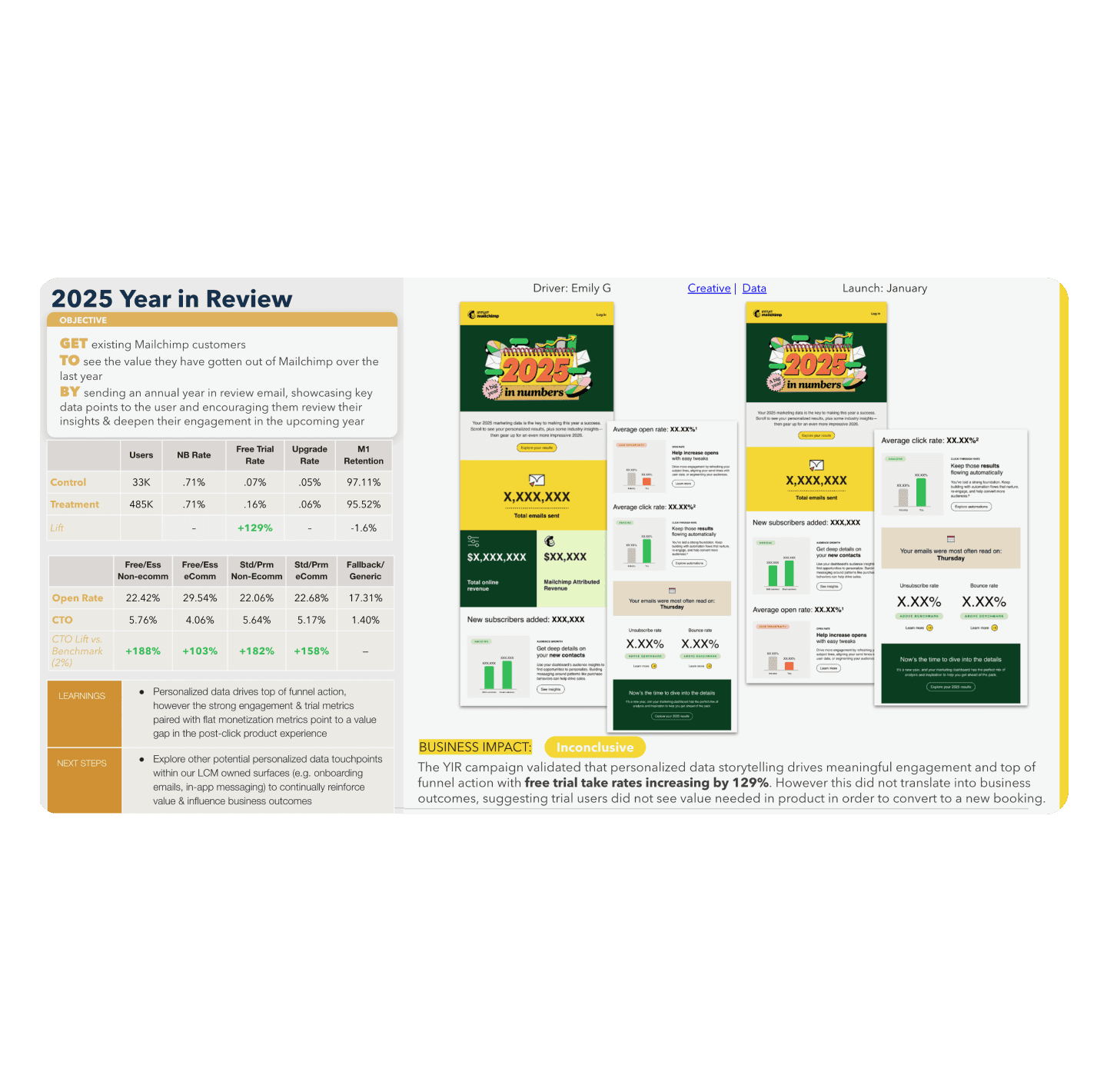
The Year in Review significantly outperformed baseline engagement metrics, validating the effectiveness of personalized data storytelling at scale.
• Free trial conversion increased by 129%, indicating strong top-of-funnel impact
• Click-to-open rates exceeded the 2% benchmark across all segments, with lifts ranging from +103% to +188%
These gains suggest that reframing analytics as a narrative experience not only improved engagement, but also drove meaningful user action.
Qualitatively, the experience shifted how users perceived their data from a static report to a reflection of their work over time making insights more accessible, contextual, and emotionally resonant.
The campaign also surfaced a key product gap: while the experience successfully drove discovery and initial engagement, the post-click product journey lacked the same level of clarity and narrative structure needed to sustain long-term conversion.
Next projects.
(2016-2025)