The Challenge
The Challenge
The healthcare AI landscape presents a unique design challenge: innovation alone is not enough. For clinical tools to gain adoption, they must establish immediate trust, communicate reliability, and integrate seamlessly into already demanding workflows.
Freed was entering a category defined by both opportunity and skepticism. While ambient AI scribes promised meaningful reductions in administrative burden, many clinicians remained cautious about introducing artificial intelligence into environments where precision, privacy, and accuracy are critical.
The core challenge was twofold:
Externally, Freed needed to clearly communicate what the product did, how it worked, and why clinicians could trust it without relying on overly technical AI jargon or abstract claims.
Internally, the product experience needed to feel intuitive and frictionless for healthcare providers who operate under significant time pressure and have little tolerance for unnecessary complexity.
From a design perspective, the challenge became:
Translating sophisticated AI functionality into clear human value
Designing trust-centered interactions for high-stakes clinical environments
Reducing perceived friction around adoption
Positioning the product as a supportive clinical assistant rather than disruptive automation
Creating cohesive messaging across product and marketing touchpoints
The opportunity was not simply to market an AI tool, but to help define how clinicians emotionally and functionally understood AI-assisted documentation.
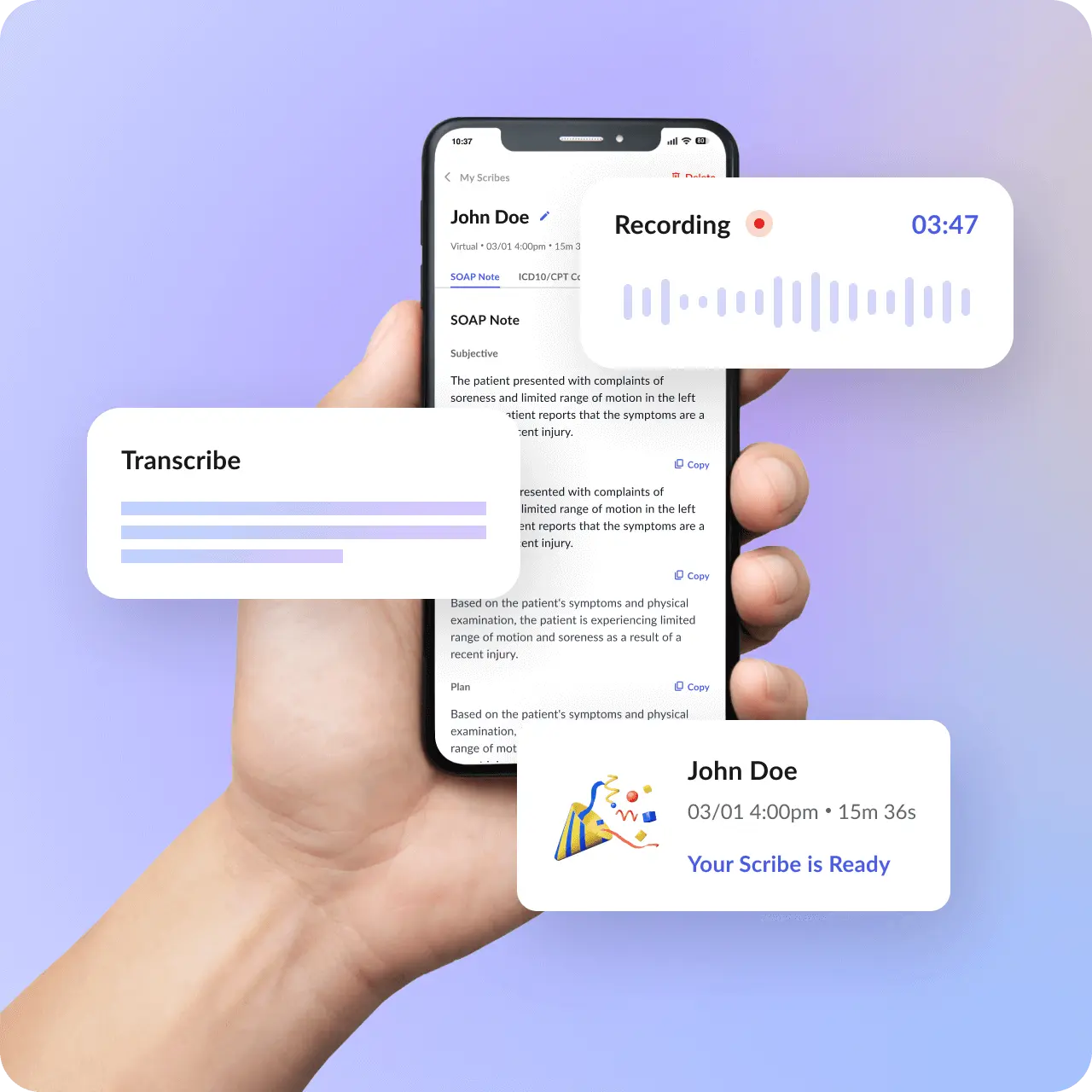
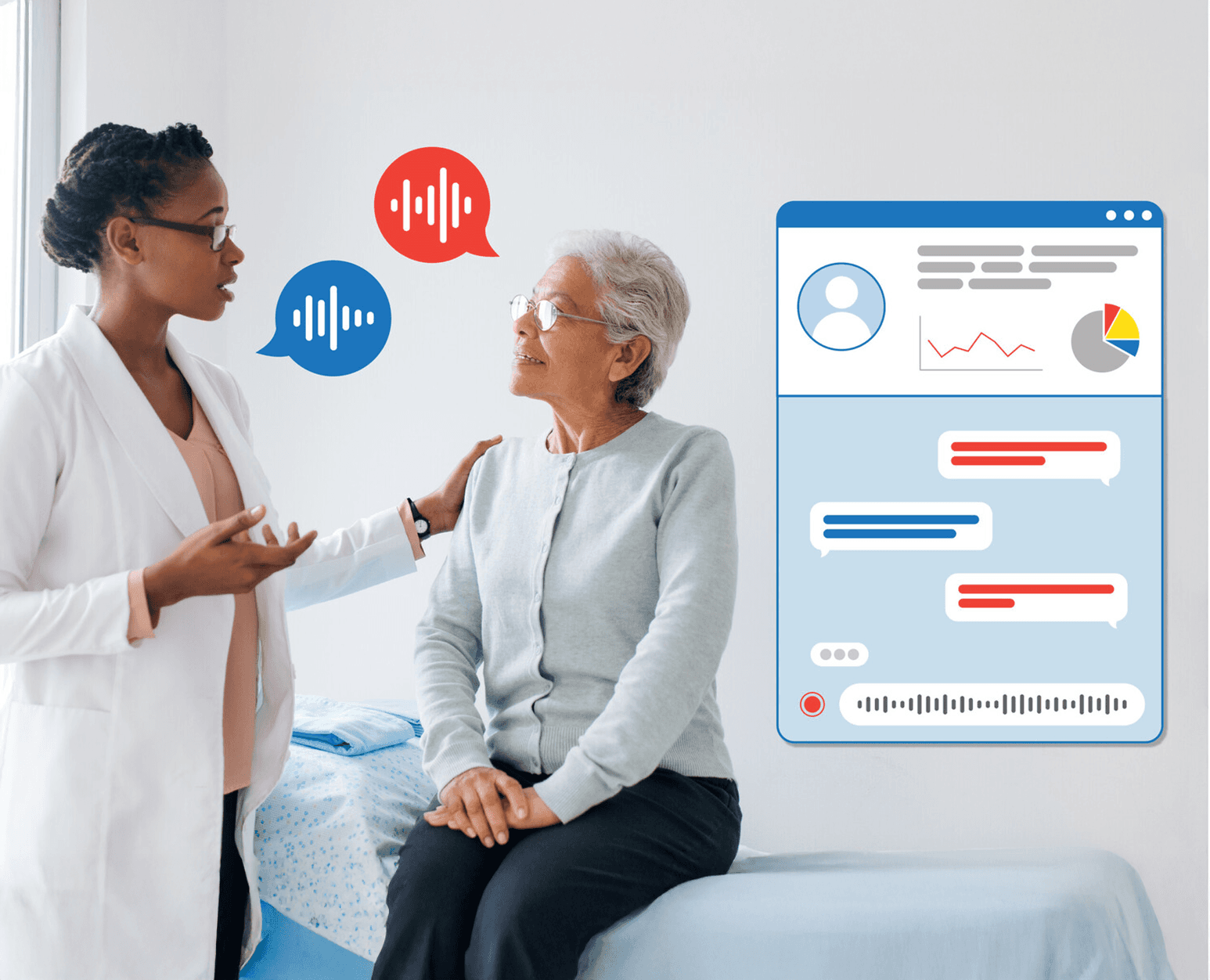
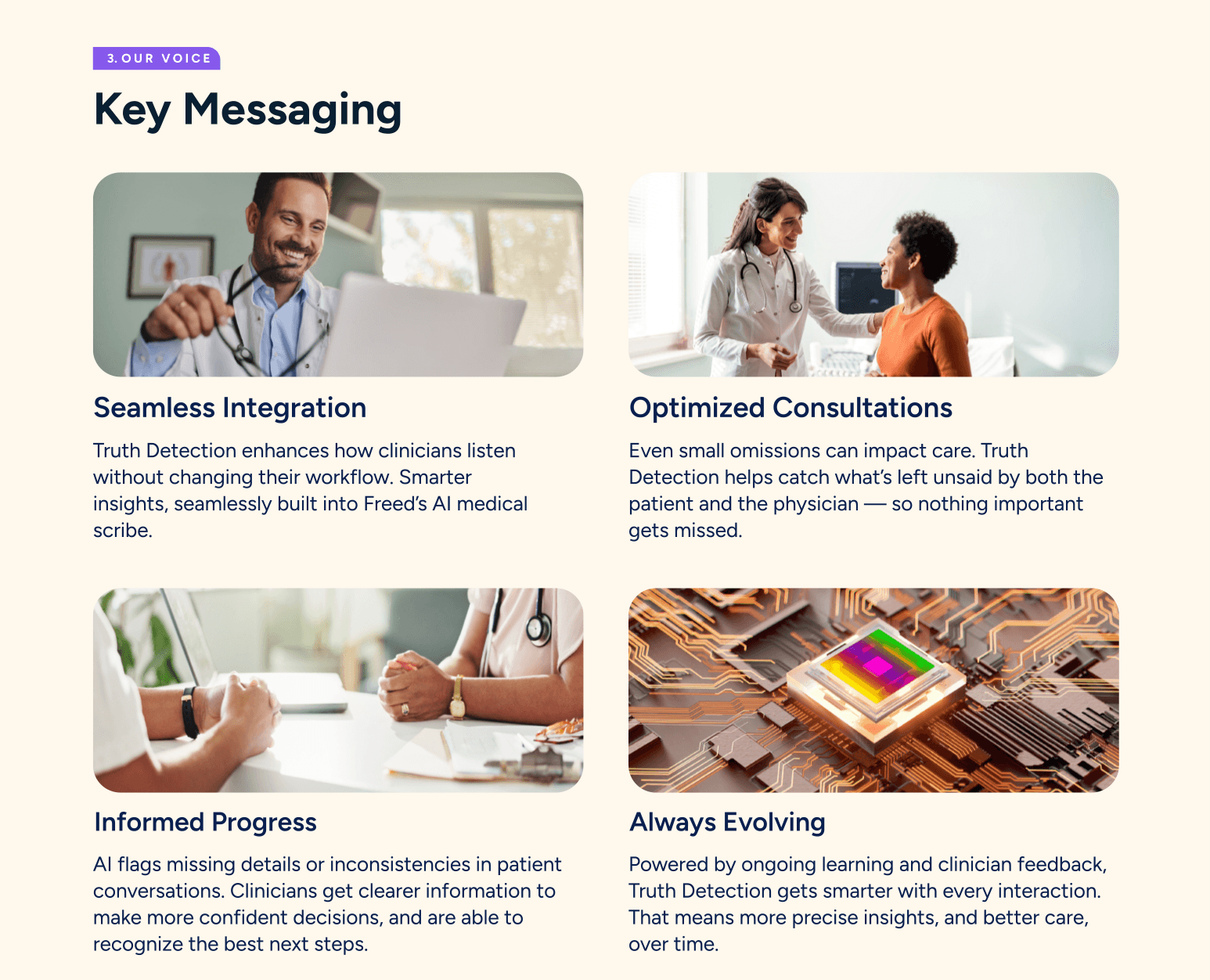
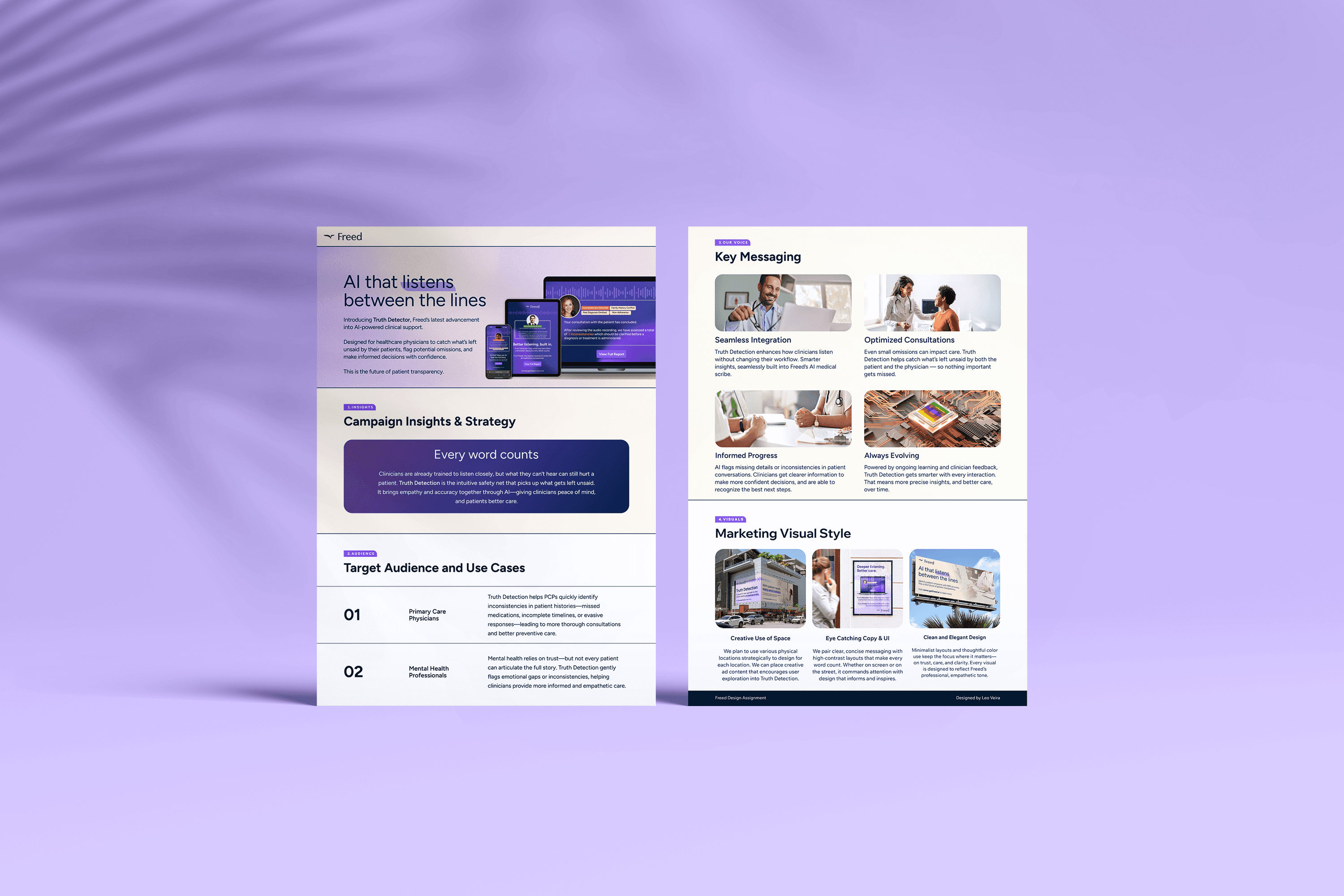
Approach and Strategy
Approach and Strategy
My strategy focused on positioning Freed as calm, intelligent infrastructure rather than flashy AI disruption.
The creative and product direction centered around three principles:
1. Human-first AI communication
Rather than emphasizing model complexity or technical novelty, messaging focused on clinician outcomes:
Less charting after hours
More attention during patient care
Reduced documentation fatigue
Increased workflow confidence
The goal was to frame AI as a practical clinical assistant.
2. Trust-centered product experience
Every product touchpoint needed to reinforce:
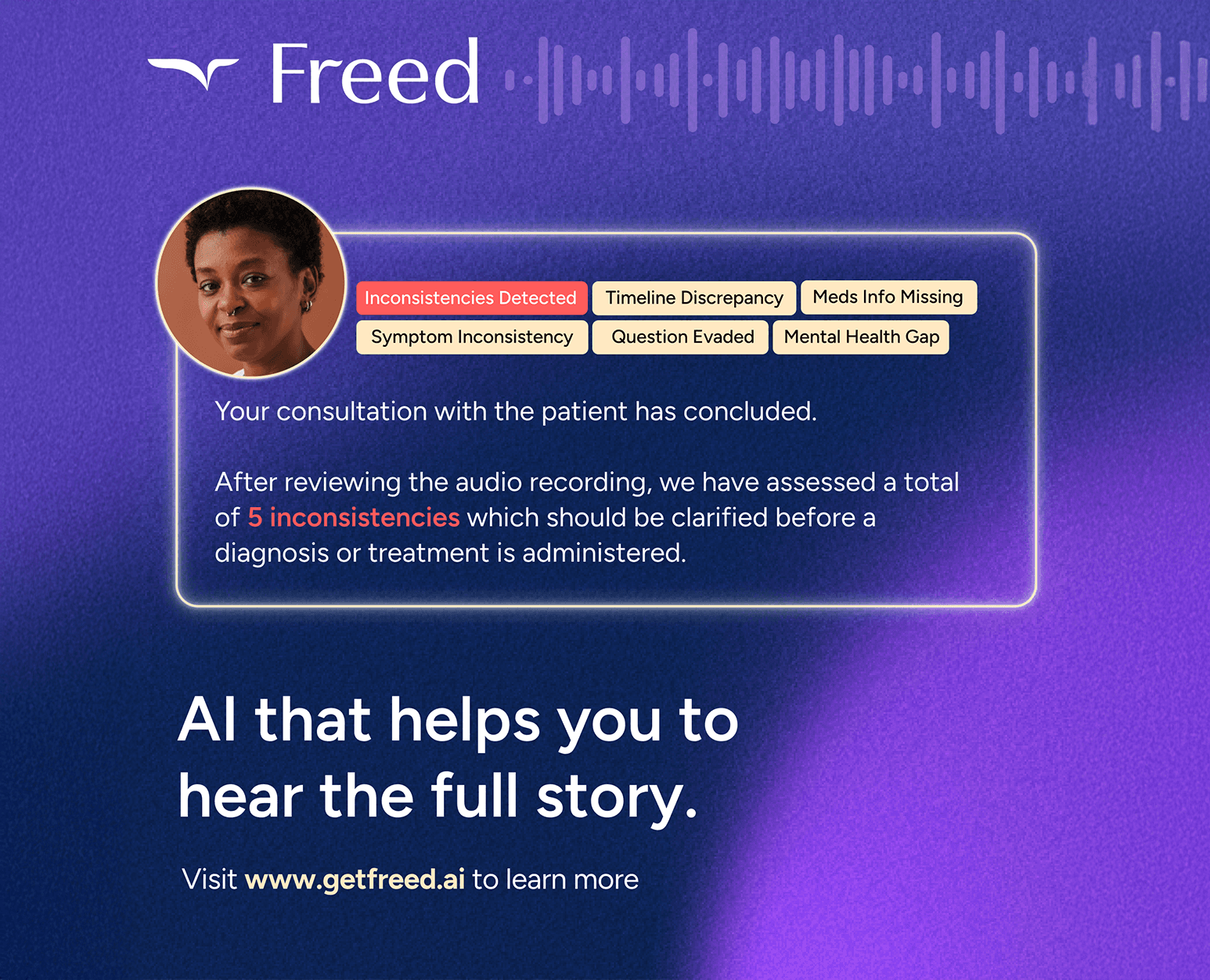
visibility, control, and reliability
This meant prioritizing:
Clear system states
Intuitive review flows
Strong visual hierarchy
Minimal ambiguity
Clear edit affordances
3. Cohesion across touchpoints
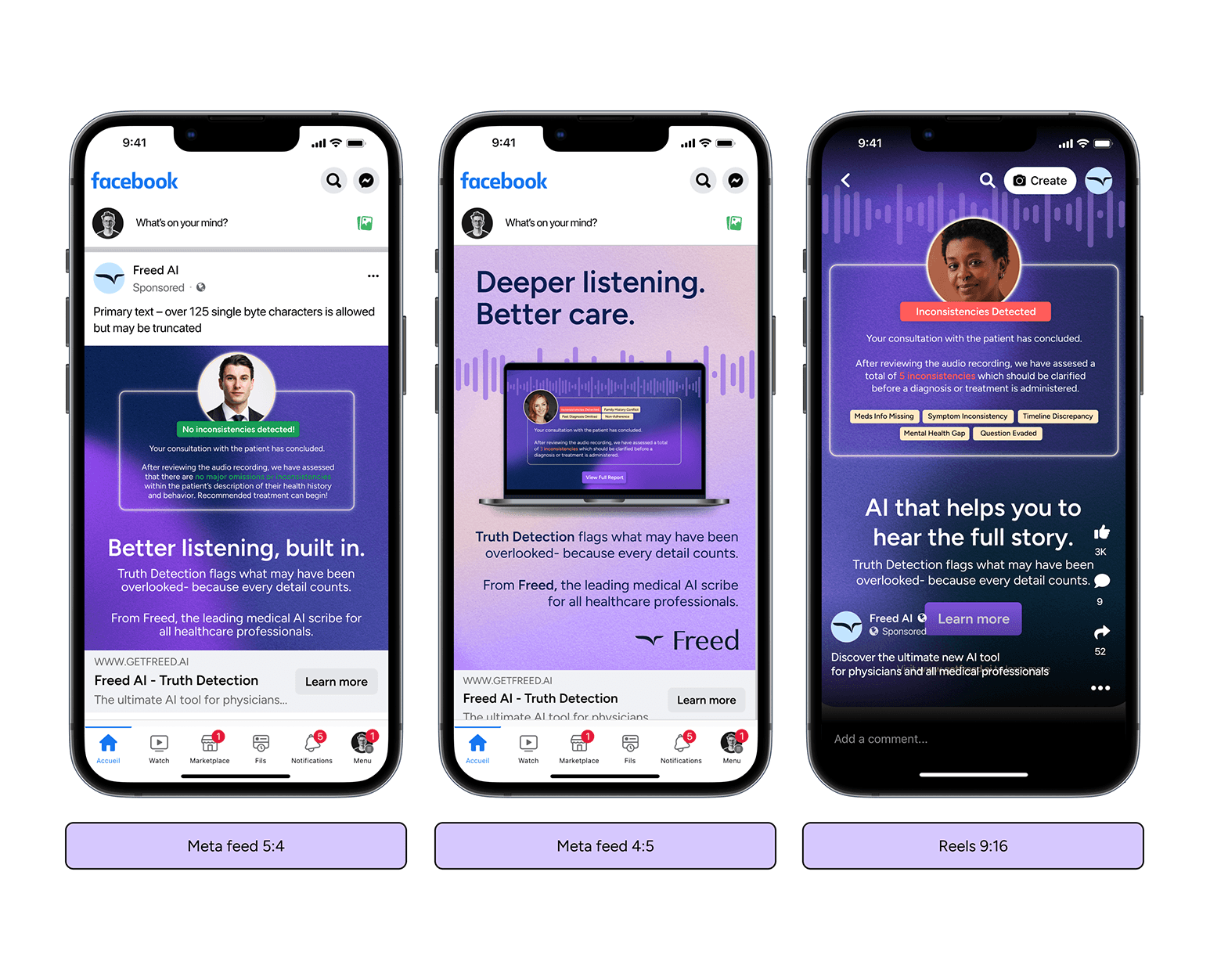
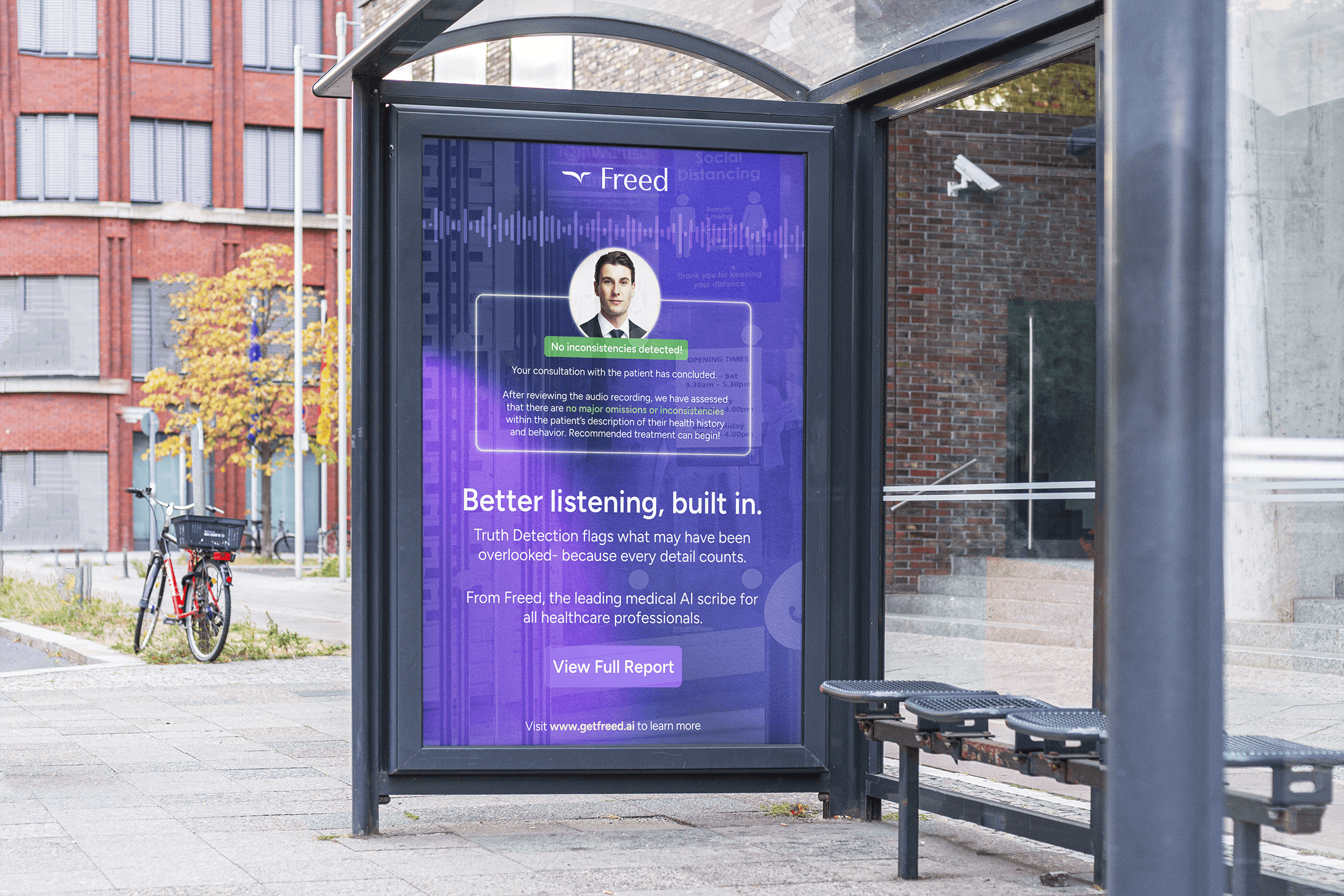
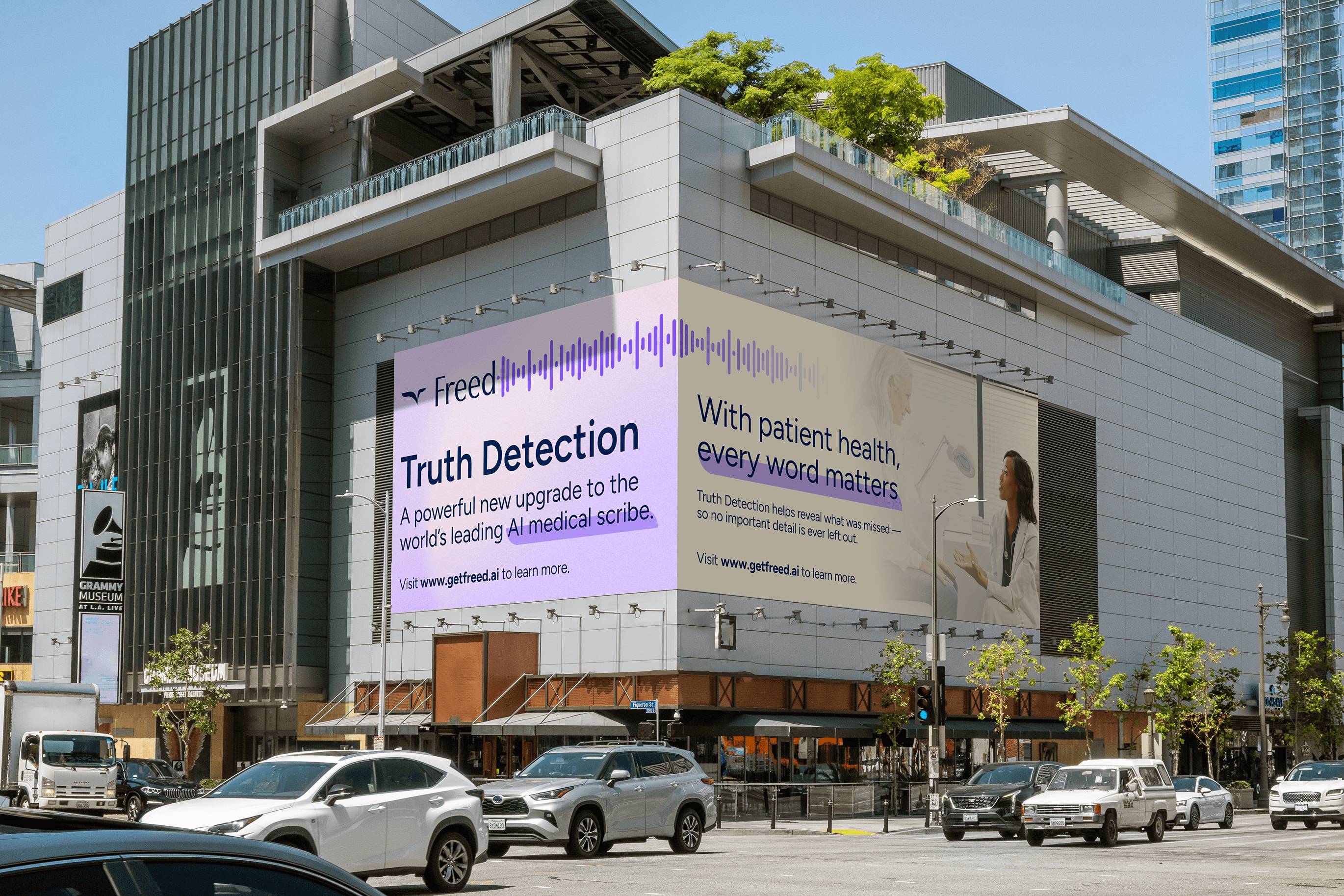
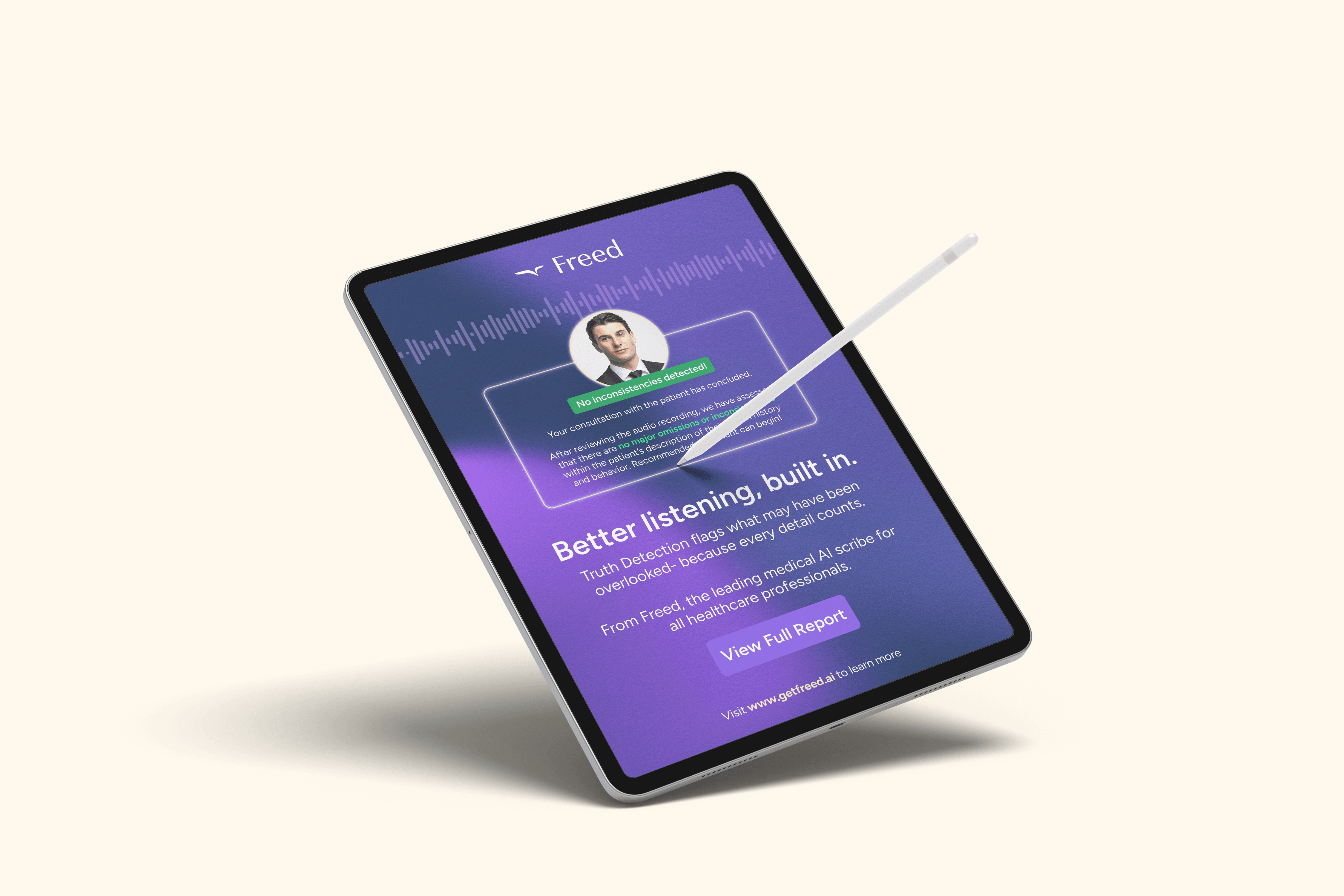
The visual and narrative language needed to remain consistent across:
Product interface moments
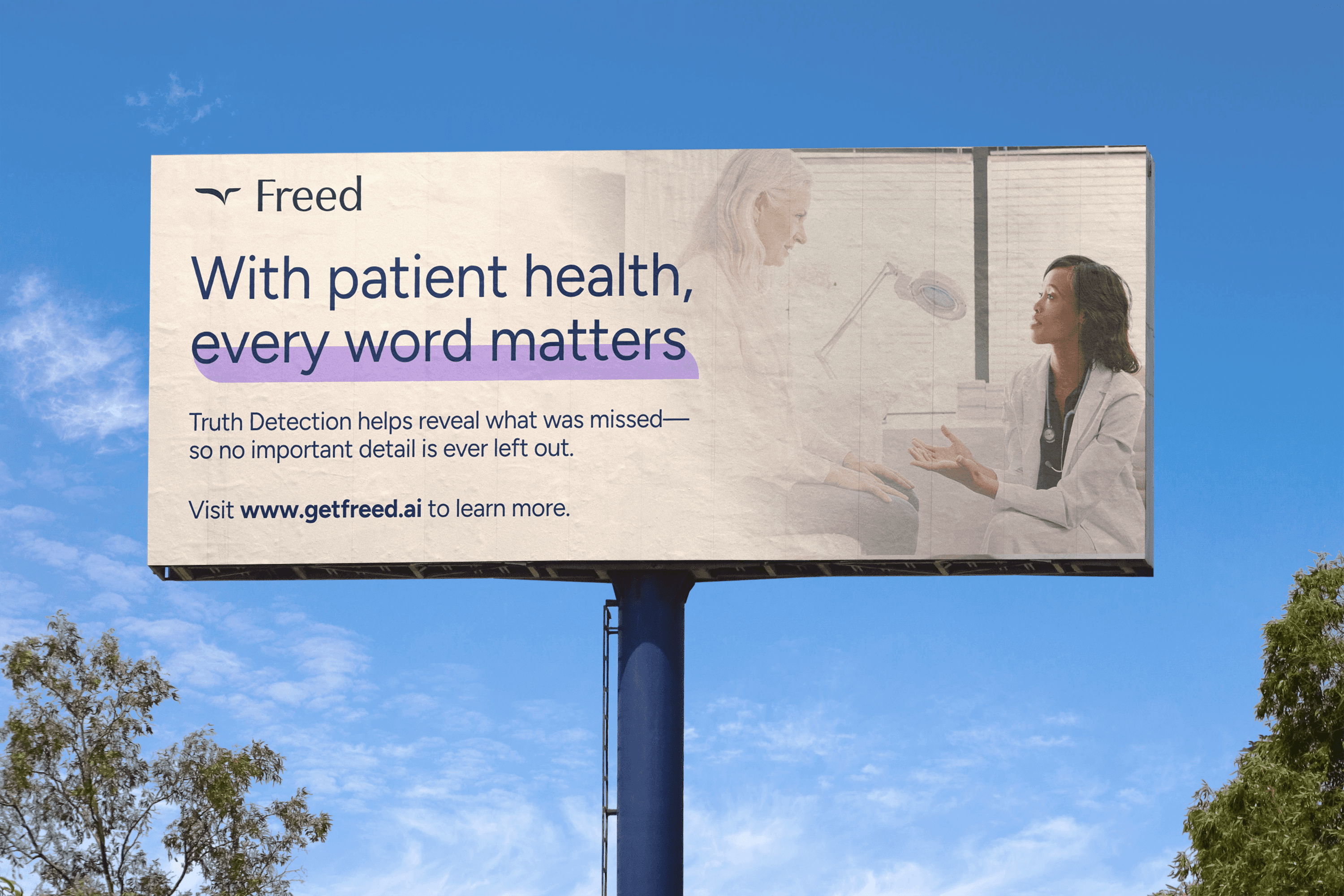
Print advertising
Marketing collateral
Brand messaging systems
This created a unified perception of credibility and maturity.
The Results
The Results
Next projects.
(2016-2025)